
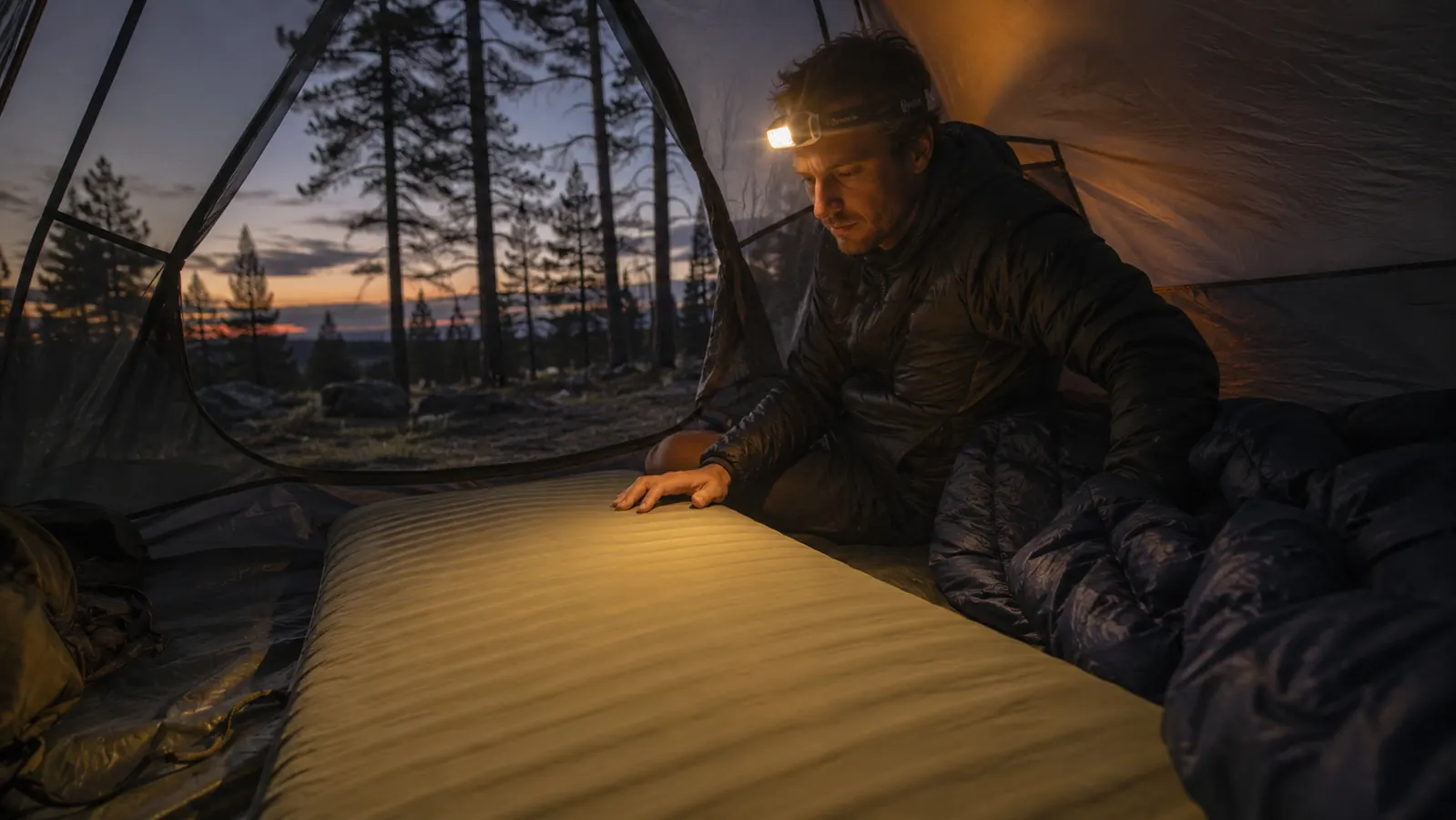
Let me tell you the thing I wish someone had told me before I bought the Gear Doctors Artemis 8.3 R-Value Self-Inflating Sleeping Pad. It is not a criticism. It is not a dealbreaker. But if you buy this pad expecting to unroll it, walk away for five minutes, and come back to a fully firm sleeping surface, you will be annoyed at yourself for not reading closer. The self-inflate needs help. That is the honest starting point, and we will get into the specifics in a minute.
I spent 23 years as a ranger in Colorado and New Mexico, including two winters stationed at elevation where sleeping cold is not an inconvenience, it is a safety issue. I know how to read a sleeping pad spec sheet, and an R-value of 8.3 is legitimately impressive for a pad at this price. The Artemis also has 4,783 Amazon reviews averaging 4.5 stars, which is a signal I take seriously. But star averages do not tell you how the pad actually inflates, how it packs against other car-camping alternatives, or what the included pillow is realistically worth. This review does.
The Quick Verdict
A genuinely warm, comfortable car-camping pad that earns its R-value rating, but you need to budget 10 to 12 minutes for inflation and accept a rolled size that goes on the outside of a pack, not inside it.
Amazon Check Today's Price →If cold ground has been waking you up, the Artemis fixes that specific problem.
With an 8.3 R-value, this pad insulates far above what most three-season campers actually need, which means you stop feeling the ground cold on shoulder-season nights that caught you off guard.
Amazon Check Today's Price on Amazon →How I Tested It (And What I Was Specifically Looking For)
I brought the Gear Doctors Artemis on four separate trips over two months: two car camping weekends at Cimarron Canyon in northern New Mexico, one base-camp setup at a group site in the Jemez Mountains, and one rooftop-tent trip where I used it as a supplemental pad for a family member. Nighttime lows ranged from 28 degrees Fahrenheit at Cimarron in October to 44 degrees in September at Jemez. I sleep on my side, I weigh 147 pounds, and I used the same 15-degree-rated synthetic sleeping bag on every outing so the variable was always the pad.
I was specifically testing four things: (1) actual warmth from the ground up on cold nights, (2) the self-inflation mechanism, how long, how firm, how much manual intervention it needed, (3) durability of the fabric and valve after repeated rolling and unrolling, and (4) whether the included repair kit and pillow add any meaningful real-world value or are marketing padding. I'll give you clear answers to all four.
The Inflation Situation: What the Listing Does Not Emphasize Enough
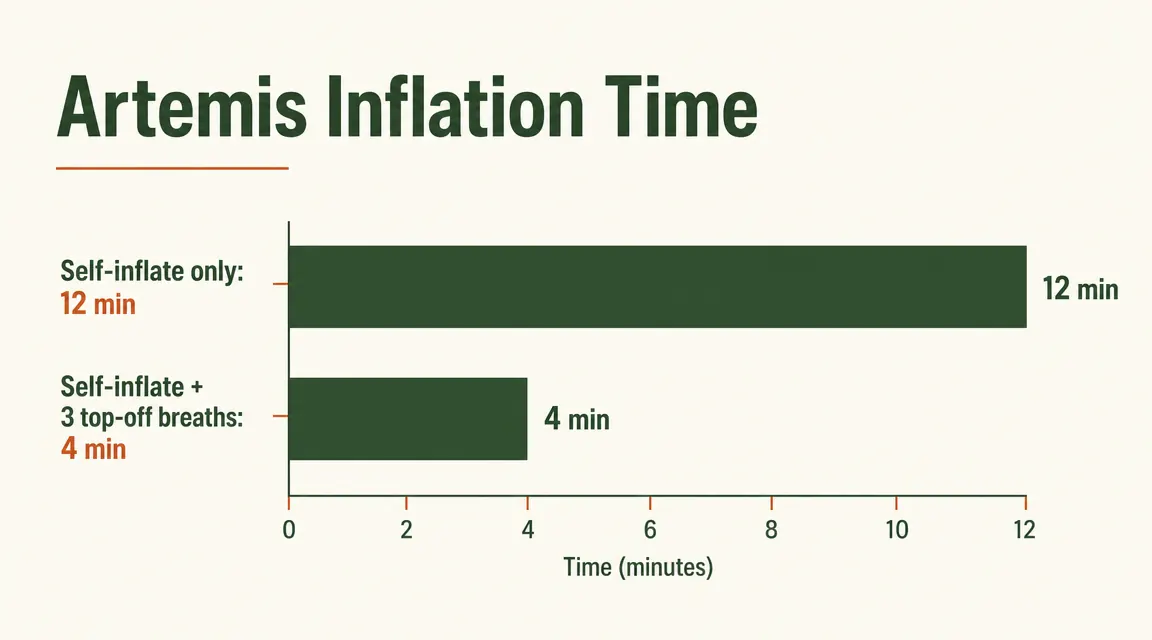
Here is what the product listing says: self-inflating. Here is what that actually means in practice: the open-cell foam core inside the pad creates negative pressure and draws air in on its own, but slowly. In my testing, fully unrolled with the valve open and left alone, the Gear Doctors Artemis reached about 70 percent of its usable firmness in roughly 10 to 12 minutes. That is not a firm sleeping surface. It is a squishy one that will bottom out under your hip if you stop there.
The fix is simple and takes about 90 seconds: once the pad has self-inflated as far as it will go, lean down and blow two or three full breaths into the valve and close it. The result is a noticeably firmer surface that holds overnight without detectable deflation. I never woke up on the ground. But you need to know to do this, the instructions mention it in passing, and most reviewers skip over it entirely. If you have owned any self-inflating pad before (Therm-a-Rest, NEMO, or similar), this behavior will be completely familiar. If this is your first self-inflating pad, budget the 12 minutes, add the top-off breaths, and you are sorted.
The pad reached 70 percent of usable firmness on its own in 12 minutes. Three breaths got it the rest of the way. That two-step is the only real learning curve here.
The 8.3 R-Value: Does It Actually Hold Up in the Cold?
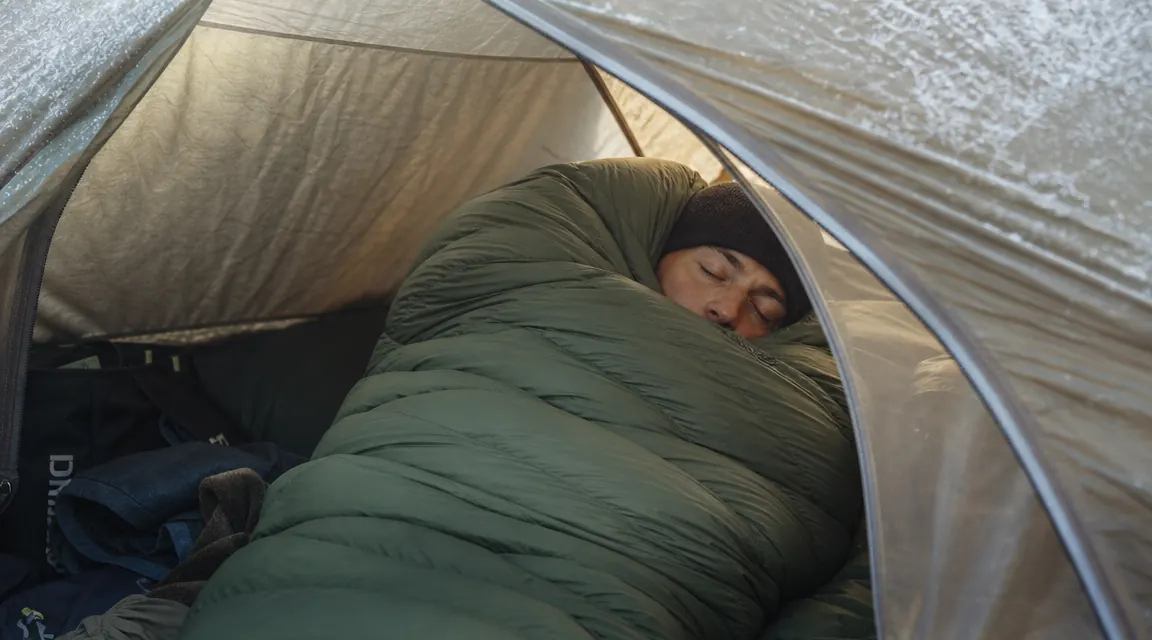
Yes. And I do not say that lightly because R-value claims get inflated constantly in the camping gear market. The night I care about most from my test series was the October Friday at Cimarron Canyon, 28 degrees at 2 a.m. with no precipitation but significant wind chill running through the canyon. I was in a 15-degree bag, on the Artemis, in a double-wall tent on flat compacted dirt. I slept through the night with no cold sensation from the ground at any point.
For context: I have used a Therm-a-Rest ProLite with an R-value of 2.4 in similar conditions and woken up with a cold back at around midnight. The difference at 28 degrees between an R-2 pad and an R-8 pad is not subtle, it is the difference between interrupted sleep and uninterrupted sleep. If you are a car camper doing three-season trips in the US, R-4 is the common benchmark for cold-weather camping. R-8.3 is winter territory. For most buyers, this pad is warmer than they will ever need it to be, and that is a good problem to have.
Size and Pack Weight: Great for Car Camping, a Hard Conversation for Backpackers
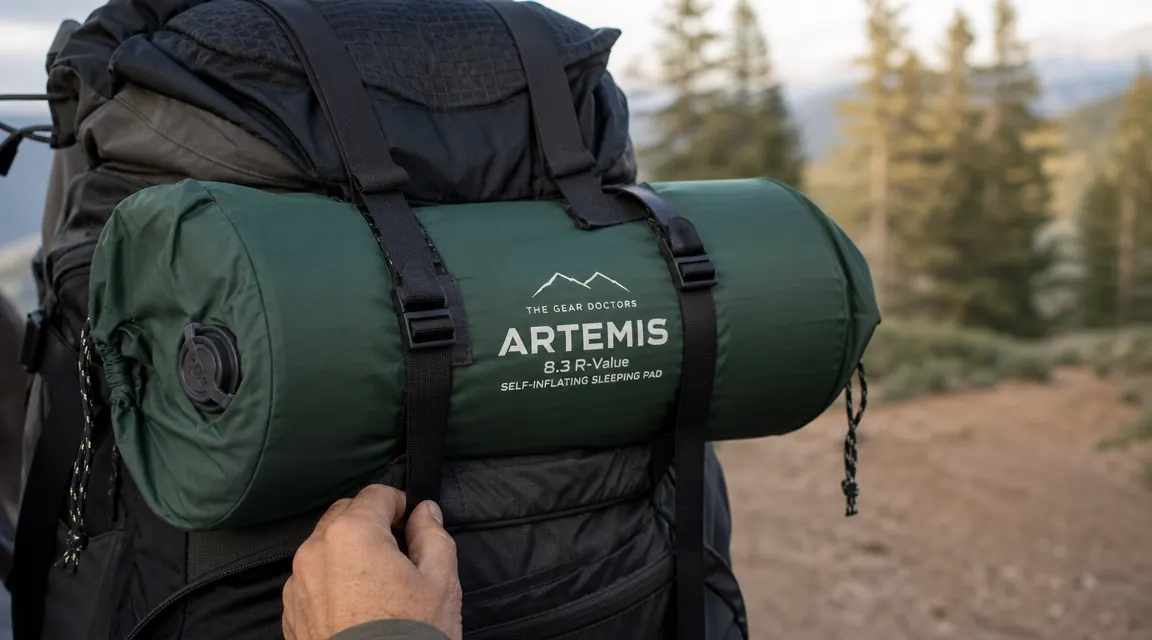
Rolled and strapped, the Artemis packs to approximately 26 inches long by 7 inches in diameter, roughly the size of a large rolled sleeping bag. It weighs a bit under 4 pounds. Those dimensions and that weight are completely unremarkable for car camping where you are loading a vehicle. For backpacking, they are a problem. This pad will not fit inside a standard 65-liter pack. It straps to the outside, which adds drag on narrow trails and is genuinely annoying in dense forest or brush.
I want to be direct here: the Artemis is not marketed as a backpacking pad. It is marketed as a car camping pad with premium insulation. Evaluated in that context, the pack size is completely acceptable. But I have seen reviewers dock it stars for being too heavy to backpack with, which is a bit like complaining that a cast-iron skillet is too heavy to bring backpacking. Know what you are buying it for. For drive-in sites, the size is a non-issue.
Surface Comfort: The Part Most People Actually Buy It For
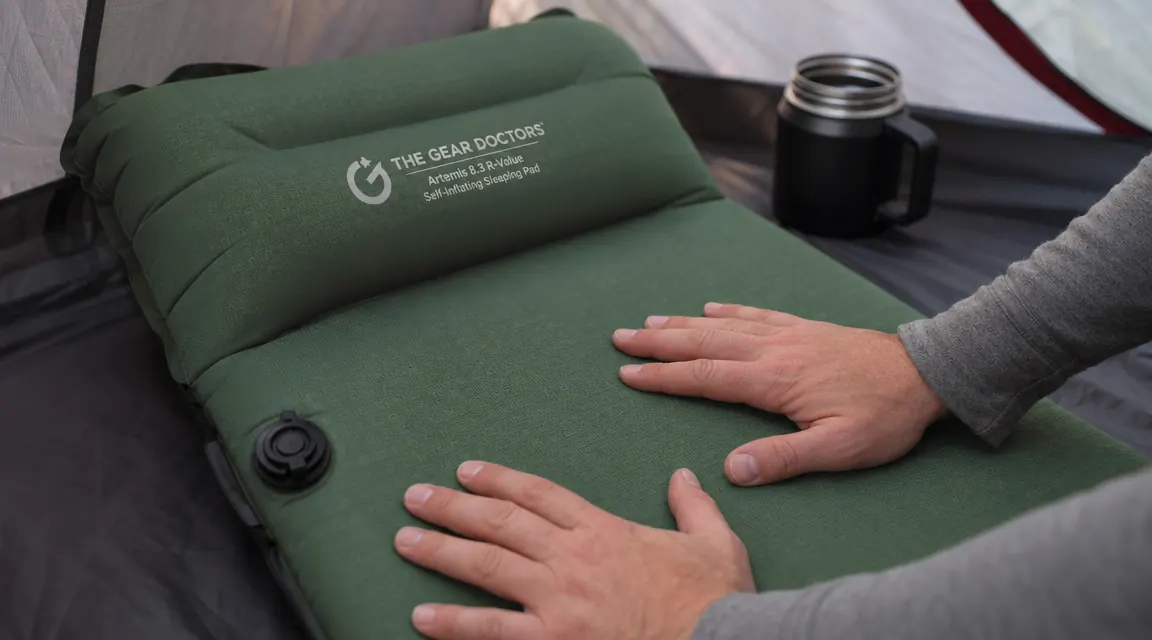
Once the pad is properly inflated (self-inflate plus manual top-off), the sleeping surface is genuinely comfortable for a foam-core pad. The brushed polyester top layer does not feel clammy against skin the way some coated pads do. I am a side sleeper, and the 2.5-inch thickness at full inflation kept my hip off the ground without bottoming out. I tested with a sleeping bag liner and without one, and in both cases I was comfortable on my side for a full 7-hour sleep.
Compared to an air-only pad in the same price range, say, a Klymit Static V, the foam core creates a different feel. Air-only pads at this price tend to feel like a waterbed: you sink and shift. The Artemis foam core means you are sleeping on a surface that has some structural resistance. Some people find that more comfortable. Some prefer the full-sink of an air pad. If you have back issues or tend to move around a lot at night, I'd lean toward the foam-core feel of the Artemis. If you want maximum loft-per-ounce and do not mind the inflatable mattress feel, look at air-only options.
The Included Pillow and Repair Kit: Honest Assessment
The Artemis comes with an inflatable pillow and a patch repair kit. I want to give you a realistic sense of what those additions mean in practice. The pillow is an inflatable camping pillow, it inflates easily, packs flat, and does the job for one or two nights. It is not a luxurious sleeping experience; it is a thin inflatable rectangle that keeps your head off the ground. If you already own a camp pillow or use a stuff-sack-filled-with-fleece setup, the included pillow adds minimal value. If you do not own one, it saves you from buying separately.
The repair kit includes two small patches. I did not need to use them during my test period, which is good. Having them is better than not having them. One pinhole leak in a pad at a remote site without a repair kit means a very cold night. The inclusion is smart, not just marketing. Store the kit in your gear bag and hopefully never need it.
What I Liked
- R-value of 8.3 is legitimately high and held up in 28-degree real-world testing
- Foam-core surface feels structurally firm underfoot, not waterbed-like
- Brushed polyester top layer does not feel clammy or overly slick
- Holds overnight without detectable deflation once properly inflated
- Includes repair kit, genuinely useful, not just padding
- 4,783 reviews at 4.5 stars is a strong signal of consistent product quality
Where It Falls Short
- Self-inflation alone takes 10 to 12 minutes and only gets to about 70 percent firmness, you need to top off manually
- Rolled size (26 x 7 inches) does not fit inside a standard backpacking pack
- At under 4 pounds, weight is manageable for car camping but rules it out as a backpacking choice
- Included pillow is functional but thin, experienced campers likely already own something better
- No integrated pump sack; top-off breaths add moisture to the valve over time (keep the cap on when stored)
Who This Is For
Car campers doing three-season and cold-season trips who want to stop waking up cold. If you are driving to a site and weight does not matter but ground insulation does, the Artemis is an easy call. It is also a strong choice for base-camp setups, tailgate camping, and anyone who camps at elevation where overnight lows drop into the 30s even in September. Parents who camp with kids will appreciate that the R-value gives significant margin, a child on a warmer night is never going to be cold through this pad. If you previously used a thin foam roll mat and have been waking up stiff and cold, this is a direct and significant upgrade.
Who Should Skip It
Backpackers who count grams need to look elsewhere. If your pack is going on your back for more than a mile, the weight and pack size of the Artemis are real constraints and not a good fit. Ultralight campers doing summer three-season trips at low elevation are also overkill buyers here, you would be paying for R-8.3 when R-3 or R-4 would cover every night you are actually going to encounter. And if you hate the self-inflate process entirely and want something that takes 45 seconds with a pump, look at air-only pads with a separate pump sack. The Artemis self-inflate works, but it requires patience and a manual assist.
One more edge case: very tall campers. The pad dimensions are comfortable for campers up to about 6 feet tall. If you are 6-foot-2 or above, check the listed length before purchasing, you may need to look at XL sizing options from other brands.
Cold ground ruins camping. This pad fixes that problem specifically.
The Artemis consistently outperforms pads rated under R-4 on cold nights, and with 4,783 reviews backing it up, you are not taking a chance on a no-name product. Check what it costs today before your next trip.
Amazon Check Today's Price on Amazon →