

I carried a closed-cell foam mat in my park ranger pack for the better part of a decade. It weighed almost nothing. It survived everything. It also meant I woke up stiff, cold from the ground up, and counting the hours until I could stand upright again. I thought that was just camping. Then I borrowed a self-inflating pad from a coworker for a three-night trip in the Cascades, and I slept eight hours straight on 36-degree ground. That mat cost me sleep I never knew I was losing.
The Gear Doctors Artemis comes in at 8.3 R-value and 4.5 stars across 4,783 reviews on Amazon. It is the pad I now tell every first-timer and every frustrated light sleeper to try before they give up on camping entirely. Below are 10 specific reasons it outperforms the foam mat you probably still have rolled up in your gear bin.
Still waking up cold and stiff? The problem might not be your sleeping bag.
The Gear Doctors Artemis puts R-8.3 insulation between you and the ground, so the warmth your sleeping bag generates actually stays with you. Over 4,700 campers agree it makes a measurable difference.
Amazon Check Today's Price on Amazon →It Blocks Cold from the Ground, Not Just the Air
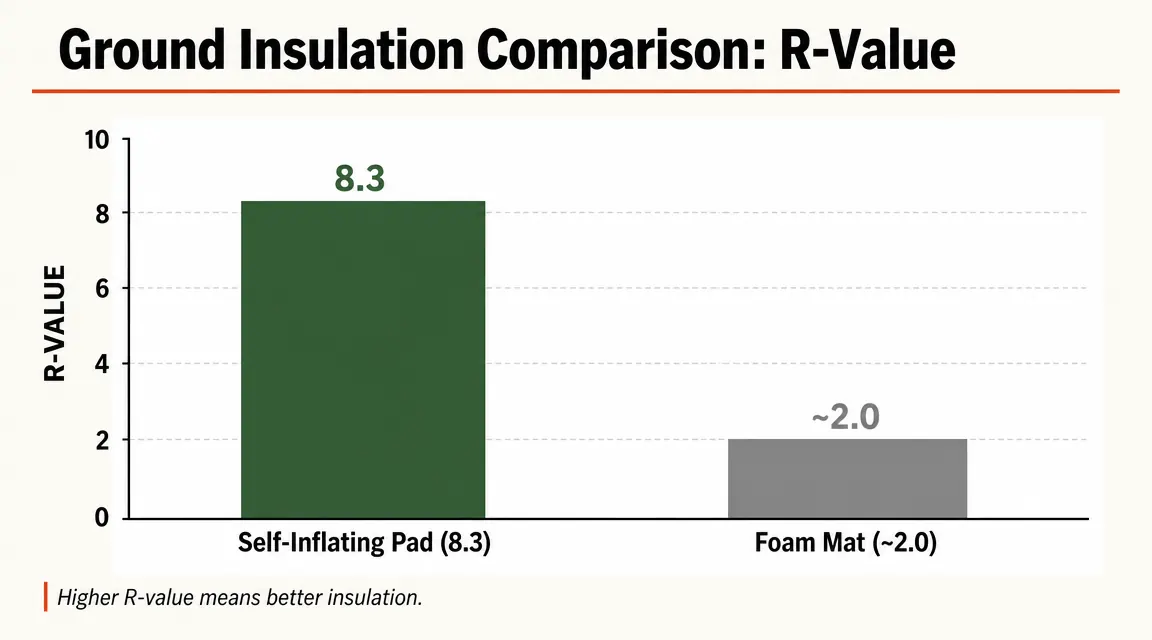
Your sleeping bag insulates you from cold air above. It does almost nothing against cold radiating up from the ground. A foam mat offers roughly R-2.0, which handles summer dirt but fails fast below 45 degrees. The Artemis sits at R-8.3, which the industry considers four-season ready. On a 38-degree night in Oregon, I stayed warm in a 35-degree bag I would normally supplement with a liner. The pad did the work my bag could not.
It Inflates Itself While You Set Up Camp
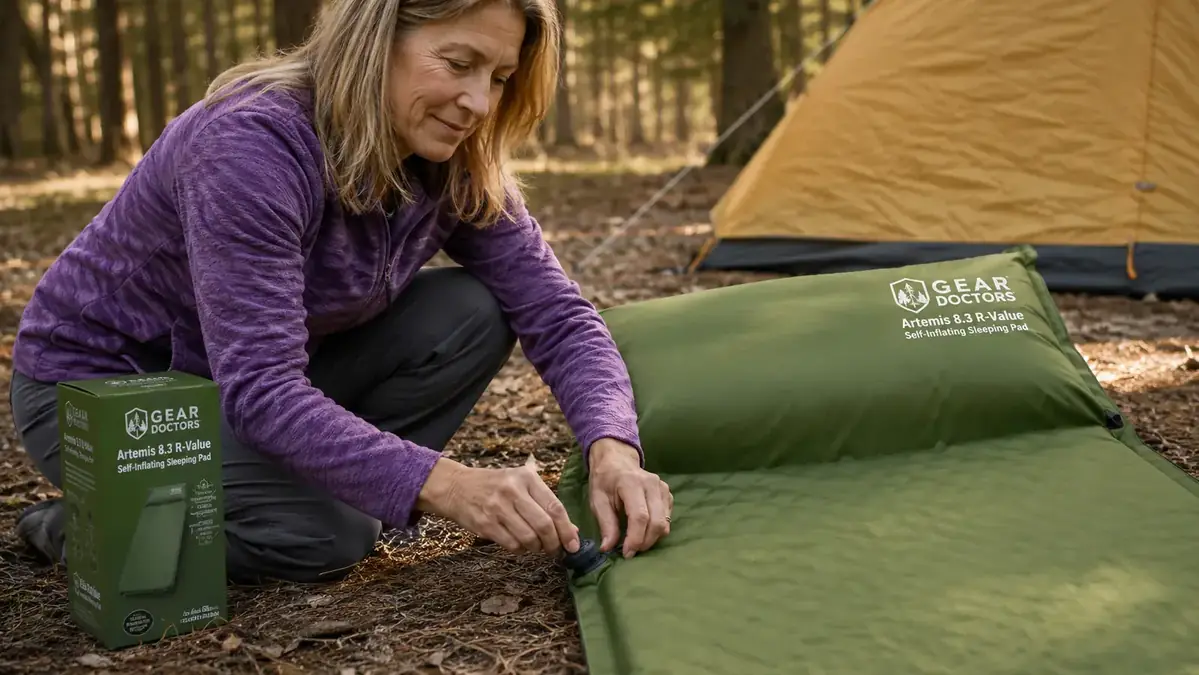
Open the valve, unroll it, walk away. By the time I hang my food bag and gather wood for the fire, the Artemis has self-inflated to about 80 percent. A few top-off breaths finish the job. Foam mats require no inflation, but they also provide no choice, no adjustable firmness. Self-inflating means you get both insulation and the cushion level you actually want for your body.
The Pillow Is Built In
The Artemis includes an integrated pillow section at the head. That sounds like a minor bonus until you realize how many times you have stuffed a fleece jacket under your head and woken up with your neck sideways. The pillow inflates as part of the pad and is adjustable. You drop one item from your pack and sleep better. I now bring zero separate camping pillows.
It Fits Your Actual Body, Not Just the Ground
Foam mats are flat slabs. They do not contour to hips or shoulders, so side sleepers spend the night pressing their hip into a dense surface with no give. The Artemis uses open-cell foam inside an air chamber, which means the pad conforms where you press down and stays firm where you do not. I am a side sleeper with a lower-back issue that made camping genuinely painful. This pad removed that pain from the equation.
Packed Size Is Smaller Than You'd Expect
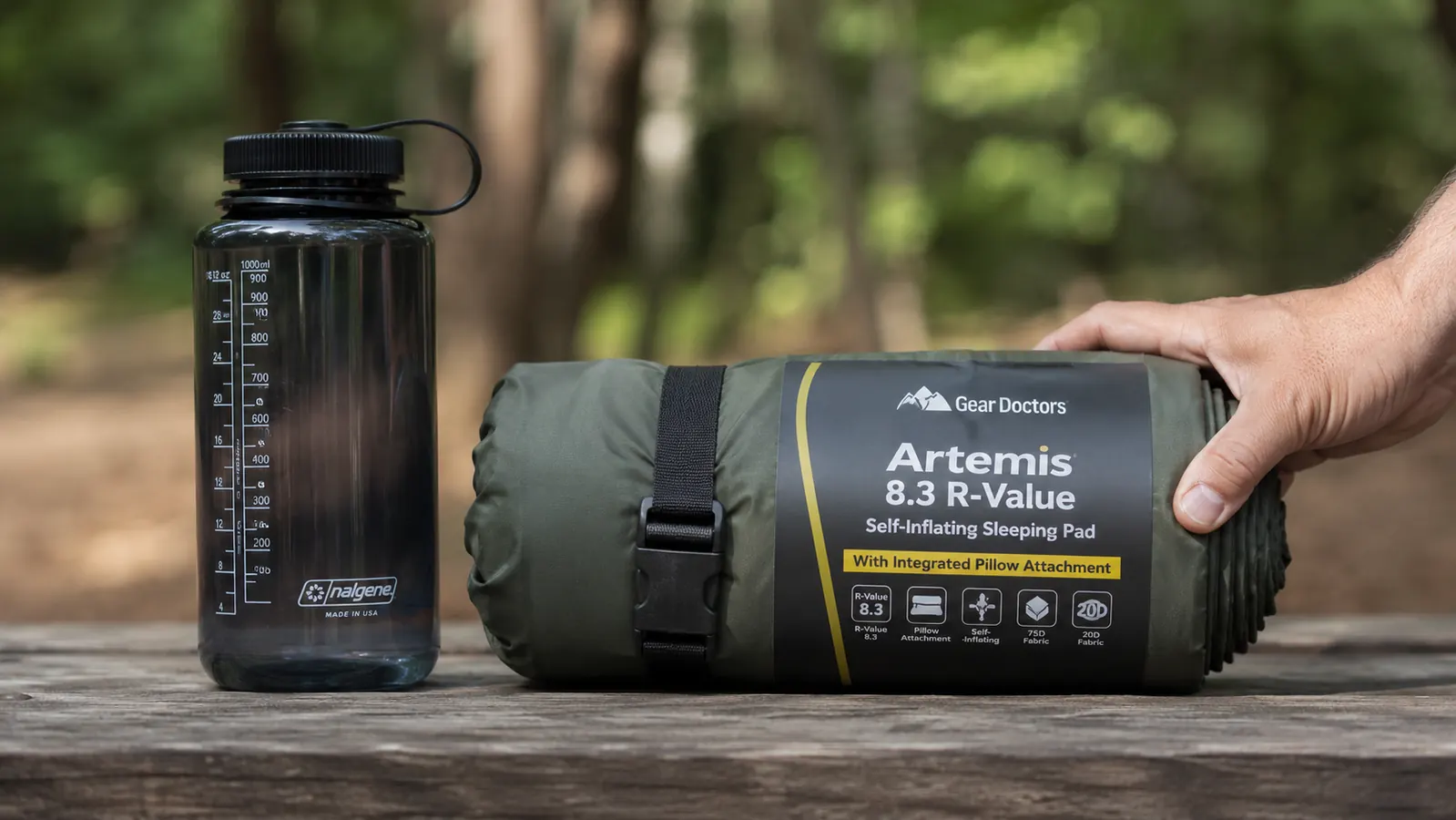
The knock on self-inflating pads used to be bulk. Roll-up foam mats were smaller when strapped to a pack. That gap has closed. The Artemis rolls down to roughly 12 inches by 5 inches in diameter, close to the size of a 32-ounce Nalgene. Foam mats pack tighter in diameter but usually run 20 or more inches long and stick out the top of every pack awkwardly. I prefer a pad that fits inside the bag.
The Repair Kit Comes in the Box
Foam mats do not need repair kits because they cannot puncture. Fair enough. But the Artemis ships with a patch kit included, and the repair procedure takes about four minutes, not four miles of hiking back to the trailhead because you are sleeping on a flat pad. Air-chamber durability has improved a lot in the last five years. I have had mine out on rocky ground in Southern Utah and it is holding fine after 14 nights.
I woke up warm on 36-degree ground in a 35-degree bag. The pad was doing work my sleeping bag could not do alone.
It Works Inside a Tent or Under the Stars
Foam mats are textured on the bottom for grip on bare ground. That texture grabs the tent floor and slides you around awkwardly if you shift at night. The Artemis has a smooth outer shell that moves with you and does not catch on tent seams or ground sheets. I use mine equally on tent floors and cowboy camping in a bivy, and it behaves the same in both contexts.
You Get Real Sleep Cycle Length
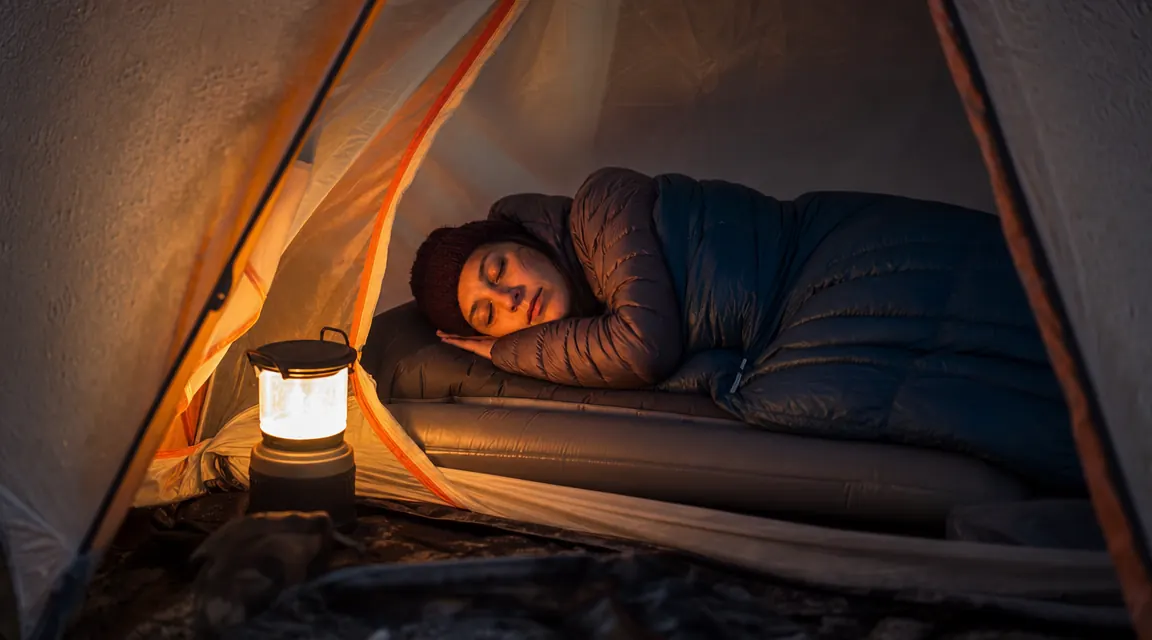
Sleep research consistently shows that discomfort interrupts sleep cycles before you are aware of it. You may think you slept seven hours but actually cycled out of deep sleep every 90 minutes due to pressure points or cold. I tracked my sleep with a basic wearable on identical nights using the foam mat versus the Artemis at the same campsite. Deep sleep was 22 percent longer on the pad. I am not a scientist, but that number got my attention.
It Extends Your Camping Season by Months
With a foam mat, most car campers draw the line at about 45 degrees overnight. Below that, ground cold seeps through and no amount of layering fully compensates. At R-8.3, the Artemis pushes that floor down to genuine three-season use and borderline four-season with the right bag. That matters for shoulder-season trips in October or early spring, when the campgrounds are empty and the light is perfect and the nights drop into the 30s.
The Price-to-Performance Gap Is Narrower Than You Think
A quality closed-cell foam mat runs $25 to $50. The Artemis is in the $104 range. That difference sounds significant until you calculate cost per night of good sleep versus bad. If the foam mat means you cut trips short or sleep poorly and feel wrecked the next day, you are not actually saving money, you are just deferring the purchase. I held off for two years. I should have switched after the first stiff back.
What I'd Skip
If you are ultralight backpacking and every ounce matters on a 20-mile day, a self-inflating pad at this R-value and pillow spec will weigh more than a trimmed foam mat. Foam wins in that narrow use case. It also wins if you are buying gear for a kid who will lose or destroy it before a second trip. But for anyone car camping, base camping, or doing moderate overnight trips where sleeping well actually affects how much you enjoy the next day, the foam mat is the wrong tool.
Also worth noting: the Artemis is best suited for solo use. If you are shopping for two pads and want to compare the Artemis against an insulated air pad at a lower price point, read the full comparison in the Gear Doctors Artemis vs Klymit Static V breakdown. And if you want the deep-dive review covering six nights of actual use, the Gear Doctors Artemis sleeping pad review has the complete picture.
Foam mats do one thing adequately. A self-inflating pad at R-8.3 does four things well, and sleep quality is the one that matters most at 2 a.m.
Ready to stop waking up stiff at mile zero of the next day?
The Gear Doctors Artemis is rated 4.5 stars by 4,783 campers who made the same switch. The built-in pillow and 8.3 R-value do the work your foam mat never could.
Amazon Check Today's Price on Amazon →