
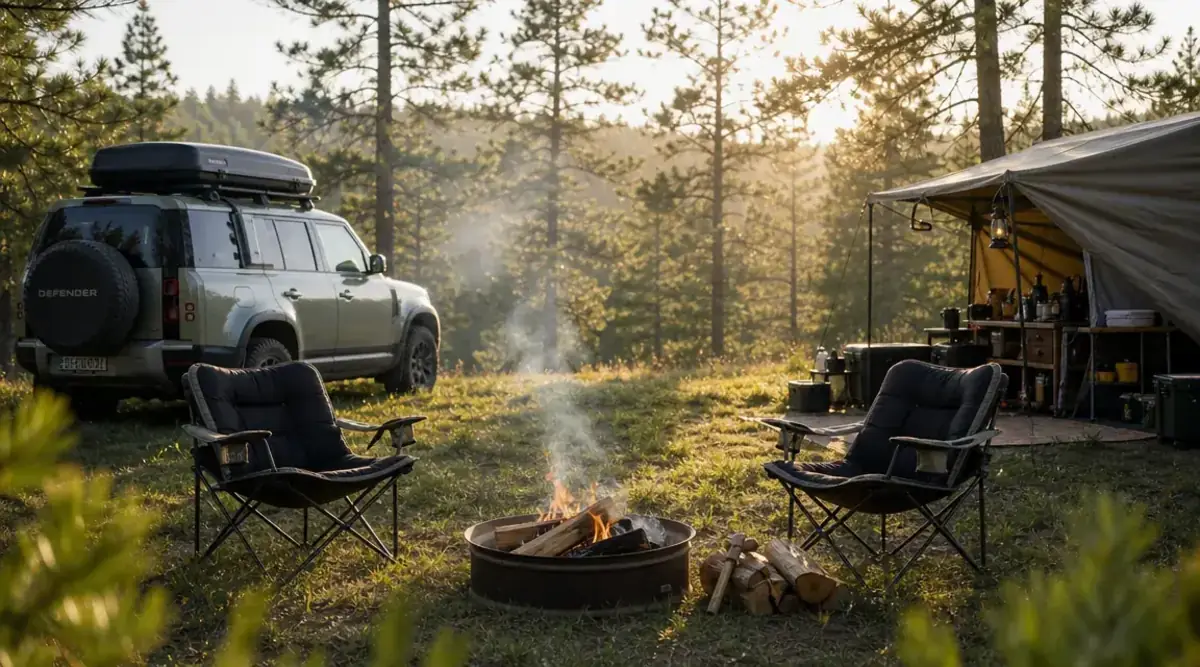
I spent 22 years as a park ranger in the Cascades, and the number one complaint I heard from campers had nothing to do with weather or wildlife. It was this: 'My back is killing me and we've only been here since yesterday.' Camping discomfort is not inevitable. It is almost always the result of a few specific setup mistakes that are easy to fix once you know what they are.
This guide walks through five steps I now follow on every trip. My husband Dave and I car camp about 14 times a year, ranging from one-night spots at Lake Wenatchee to four-day stretches in the Okanogan. These steps are the difference between a trip where we come home rested and one where we come home reaching for ibuprofen.
If your current camp chair is costing you an aching back, this padded two-pack fixes the seating problem for both of you at once.
The FAIR WIND Oversized Padded Camping Chair 2-Pack holds up to 350 lbs per chair, comes fully padded front to back, and includes a side pocket and cup holder on each chair. Rated 4.4 stars from 721 buyers.
Amazon Check Today's Price on Amazon →Step 1: Pick the Right Campsite Before You Unpack Anything
This sounds obvious but most people skip it. When you pull into a campsite, spend three minutes walking the space before you start unloading the car. You are looking for three things: natural shade that will cover your main sitting area between 11am and 3pm, a level patch of ground for the tent, and enough clearance from the fire ring that your chairs and table are not baking in radiated heat all afternoon.
In my ranger days I watched countless families set up tents in the most scenic spot only to realize at 2pm that it was a sun trap with no shade until dusk. If the shade is not already there, you can create it with a 10x10 tarp strung between two trees at 7 feet. A basic blue poly tarp weighs about 1.5 lbs and takes five minutes to rig. It is not glamorous but it changes everything for a hot afternoon.
Also check your ground for roots and rocks before you lay down any sleeping gear or chair footprints. A root you cannot see in daylight becomes the thing that wakes you at 3am or causes a chair leg to pitch sideways. Take the time to sweep the area or choose a flatter patch even if it is a little farther from the view.
Step 2: Set Up Your Seating Zone Before You Start Cooking
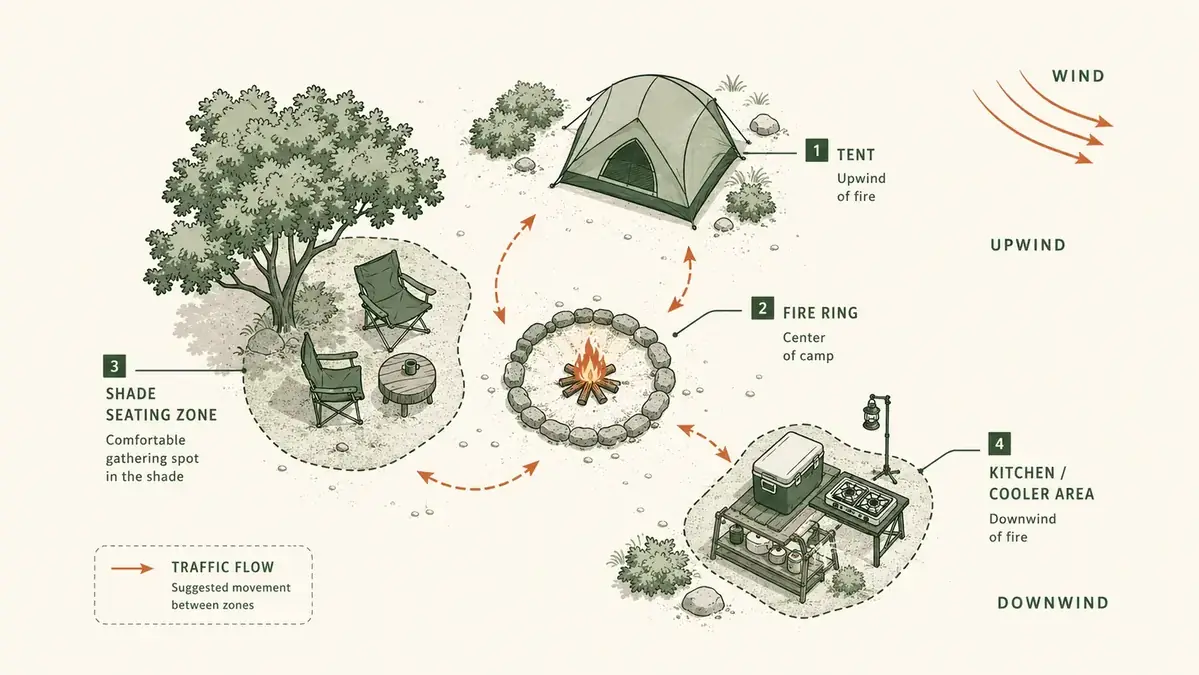
Most campers set up the tent first, then the kitchen, then finally the chairs as an afterthought. I do it the other way. The first thing I unpack is the seating, because it determines the entire traffic flow of the campsite. Where you sit shapes where the cooler goes, where the table goes, and which direction you face when you are eating or talking.
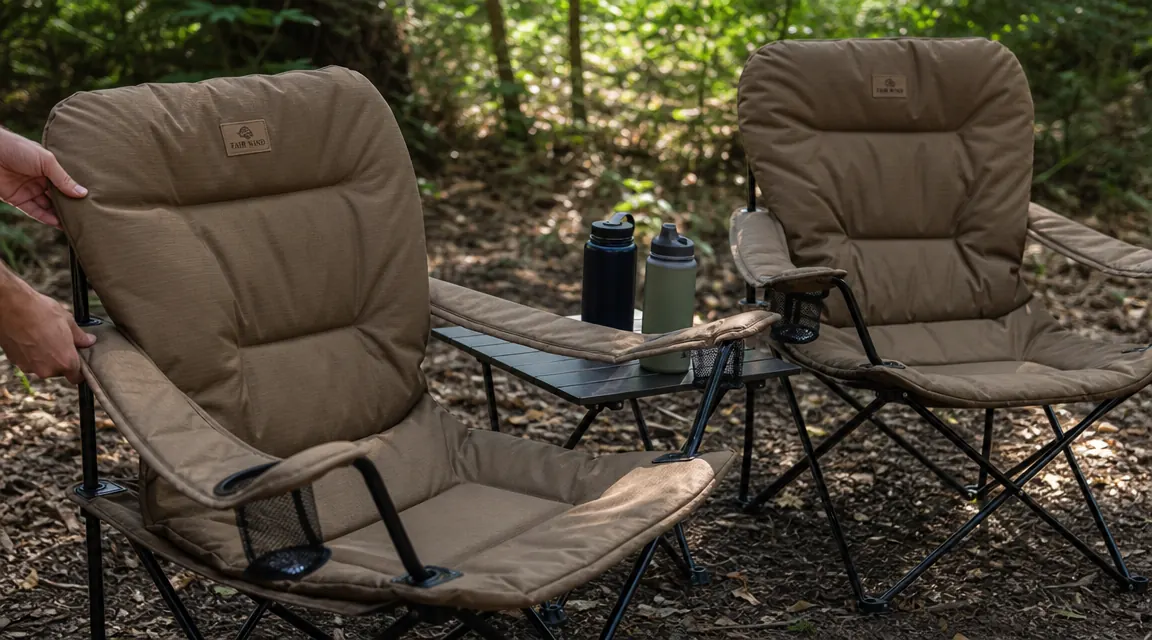
The seating is also where back problems start. A thin nylon sling chair puts you in a hammock-shaped slump for six or eight hours at a stretch. Over a long weekend that adds up to serious lumbar strain, especially if you are over 45. Dave has two herniated discs from his twenties and he spent years cutting camping trips short because by day two he could not sit comfortably anywhere. The chair that changed that for us was the FAIR WIND Oversized Padded Camping Chair, which we picked up as a two-pack. Both chairs have a full layer of dense foam padding across the seat and back, not just a thin cushion stitched to a frame. The 350-lb weight capacity means the structure does not flex and bow under you, which is part of why the back support actually holds its shape over a long day.
Position your chairs at roughly a 30-degree angle to each other rather than side by side or directly facing. That angle lets two people talk without craning their necks and also gives both people a clear sightline to the fire. Place a small camp table or a flat-topped cooler within arm's reach of each chair so you are not bending to the ground for your mug or phone every ten minutes. Those micro-bends add up over eight hours.
The chair is the piece of gear you spend the most waking hours in contact with. It deserves more thought than a tent you use for eight hours of sleep.
Step 3: Organize Your Food and Water for Zero-Effort Access
The biggest energy drain on a camping day is friction: having to dig for things, move things to get to other things, or walk across the campsite every time you want a drink. Organize your kitchen area so that everything you will reach for in the next two hours is on top or at the front of the cooler. Drinks and snacks go in the cooler's top tray or a separate small daypack near your chair. Meal ingredients for dinner can go under the drinks and stay colder because you are not opening that compartment constantly.
Hydration is the thing most campers underestimate. On a hot day at elevation, you need close to a liter per hour of active time. I keep a 32-oz water bottle in the cup holder of my camp chair so drinking is a passive habit, not something I have to remember. The FAIR WIND chairs have a cup holder sewn into the right armrest, which sounds like a small detail but means the bottle is always within reach without a side table. That cup holder has probably kept me from going to get water from the cooler and coming back with food I did not need because something else caught my eye.
For day-long comfort, keep a snack bag accessible from your chair: trail mix, jerky, fruit, crackers. Small, frequent eating keeps your energy level stable and prevents the 3pm slump that makes people want to pack up early. You are not trying to replicate a kitchen at the campsite; you are trying to make eating and drinking effortless enough that you actually do both consistently.
Step 4: Protect Your Feet and Your Lower Back Separately
Most people wear camp sandals or flip flops around the campsite. I understand the appeal after hiking boots all morning, but flat sandals on uneven ground are one of the main reasons people develop lower back ache by day two. Your feet pronate and supinate constantly on rough terrain, and without arch support that mechanical stress travels straight to your lumbar. I wear supportive water sandals, specifically the Teva Hurricane XLT2, around camp. They have a contoured footbed and a strap system that actually holds your heel. Not elegant, but my back thanks me.
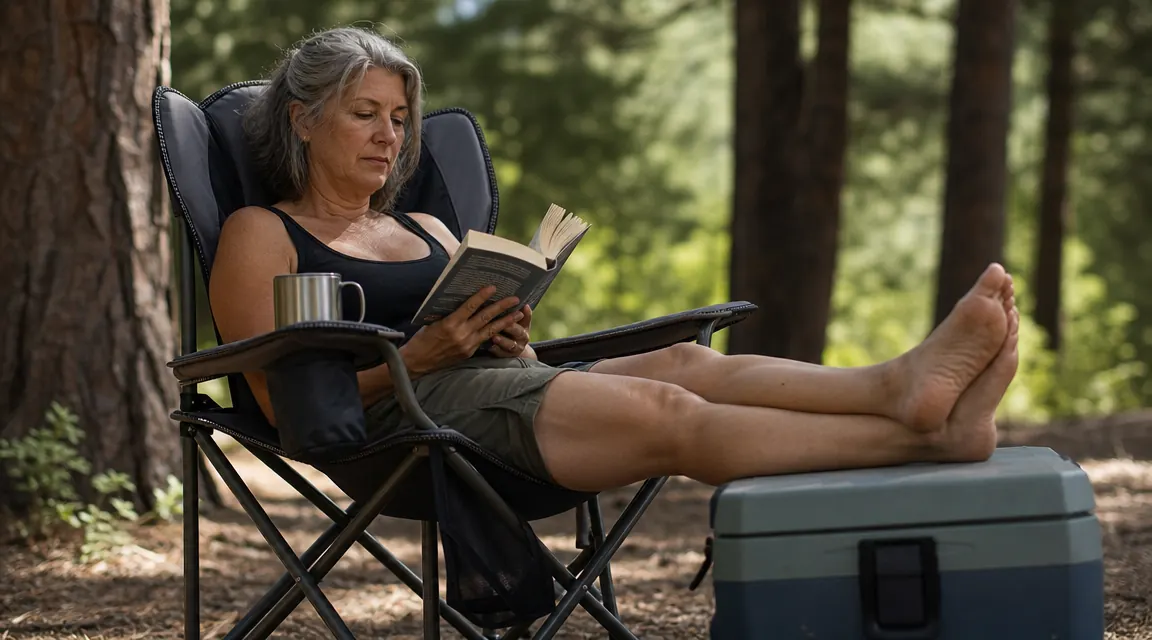
The second thing that protects your lower back is foot position while seated. In a poorly designed camp chair your feet dangle or your knees rise above your hips, which tilts your pelvis backward and rounds your lumbar spine. In a chair with a flat, deep seat and appropriate seat height, your feet rest naturally on the ground with your knees at roughly 90 degrees. The FAIR WIND chairs have a seat that sits about 17 inches from the ground, which for most adults puts the knees at a comfortable angle without elevation. If you are shorter than 5'4", a small step stool or flat rock under your feet can complete the setup.
Also bring a small lumbar pillow or stuff a fleece jacket behind your lower back if needed. It weighs nothing and the difference over six hours of sitting is real. I use a Sea to Summit Aeros pillow, which packs to the size of a tennis ball. It goes behind my lower back during afternoon reading hours and behind my head in the sleeping bag at night.
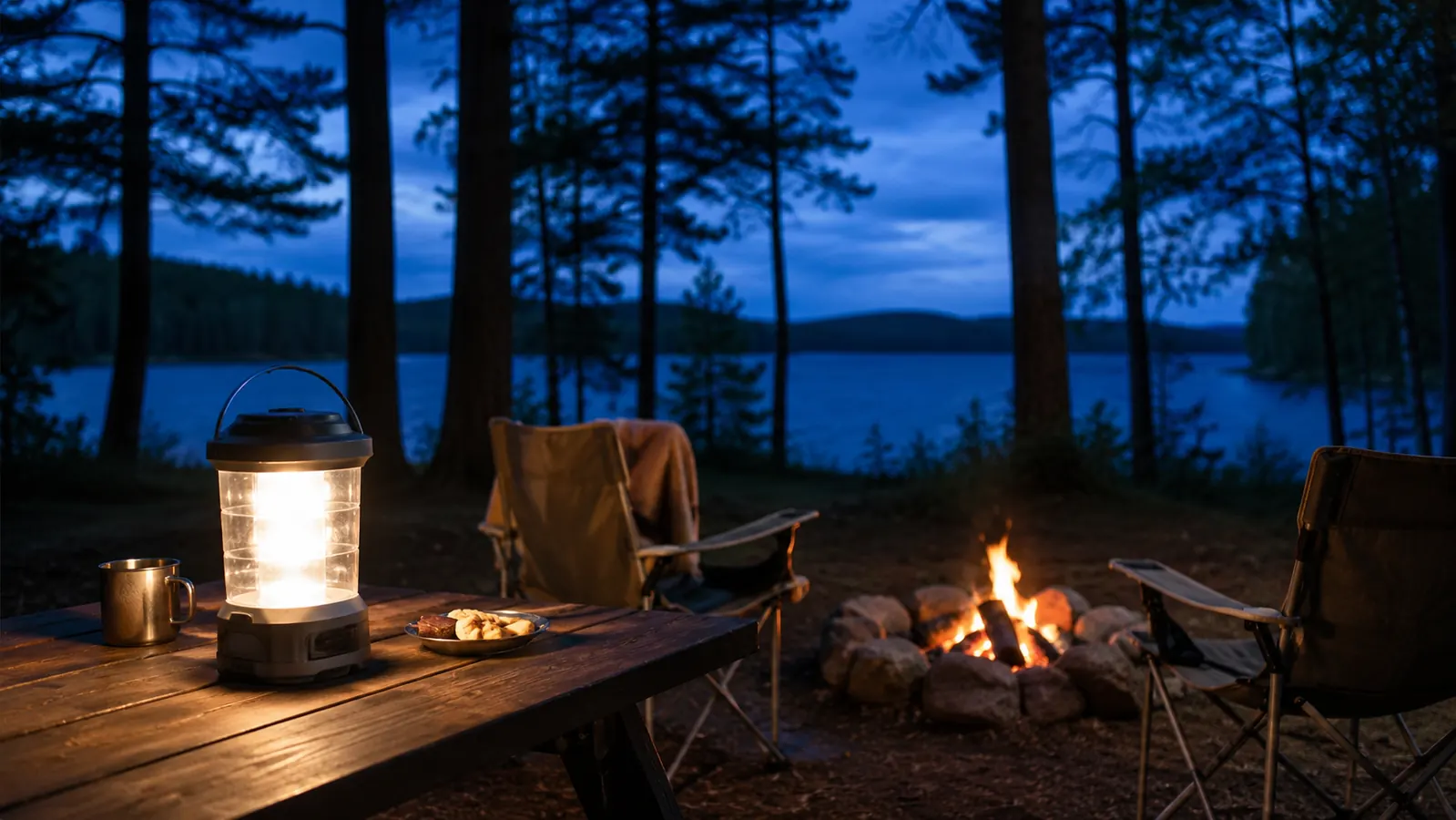
Step 5: Transition Your Campsite for Evening Before the Light Drops
The last hour of daylight is when most camping discomfort spikes. People scramble to find headlamps, trip over tent stakes, can't find the camp towel, and feel the temperature drop faster than expected because they never added a layer. Transitioning your campsite for evening is a five-minute task if you do it at 6pm, but a frustrating mess if you wait until 8pm when it is dark and cold.
At around 5:30 or 6pm, I do a quick camp lap: move the camp chairs a foot or two closer to the fire ring since the temperature will drop and the fire will get larger, add a fleece or down layer to each chair's side pocket, pull out the LED lantern and set it on the picnic table, and check that headlamps are accessible in a known location. If you have a rolling cooler, move it to within arm's reach of the cooking area since dinner prep is coming.
The FAIR WIND chairs have a large side pocket on each one that holds a jacket rolled loosely, a headlamp, a book, and a phone without the pocket bulging or tipping the chair. That pocket is where I park everything I will want after dinner. Having it organized means I never leave my chair and break the campfire spell to root through a bag in the dark.
What Else Helps
The five steps above cover the structural setup. A few additional things make a consistent difference on long campsite days. A quality sleeping pad the night before is the foundation: if you slept on thin foam on cold ground, no amount of chair ergonomics will fully compensate for the stiffness you are carrying into the next morning. Read my full notes on sleeping pad selection in the review of the Gear Doctors Artemis pad for more on that side of the equation.
Shade coverage also matters more than most people account for. A single tree does not provide consistent shade as the sun tracks across the sky. A 10x10 canopy over your seating area gives you four to five hours of reliable shade without having to move your chairs twice a day. I resisted buying a canopy for years because it felt like car camping with too much stuff. I was wrong. On a hot July day at a campsite in eastern Washington, that canopy bought us three extra hours of comfortable outdoor sitting that would have otherwise been spent inside the car with the AC on.
Finally, give yourself a 20-minute walk at midday even if you do not feel like it. Sitting in one position, even a good chair, for six or seven hours straight will stiffen your hips and hamstrings. A short walk around the campground loop or down to the lake and back resets your posture and actually makes the afternoon sitting more comfortable. I do this every day at camp, usually around 1pm, and it is the single habit that most reliably prevents that tight, concrete feeling in my lower back by evening.
For a deeper look at the FAIR WIND chair's construction, padding density, and how it performs over a three-trip stretch, I have a full review at FAIR WIND Camping Chair Review: What Three Weekend Trips Taught Me. And if you are debating whether to upgrade from a basic folding chair at all, the breakdown at 10 Reasons a Padded Camping Chair Beats a Basic Folding Chair covers the specific comfort differences that matter most for long days at camp.
If you are spending full days at a campsite, your chair is the most-used piece of gear you own. This two-pack gets both seats right.
The FAIR WIND Oversized Padded Camping Chair 2-Pack is fully padded front to back, rated 350 lbs per chair, and includes a side pocket and cup holder on each. It is the specific chair I recommend for anyone who wants to actually sit comfortably for six or eight hours without cutting the trip short.
Amazon Check Today's Price on Amazon →