
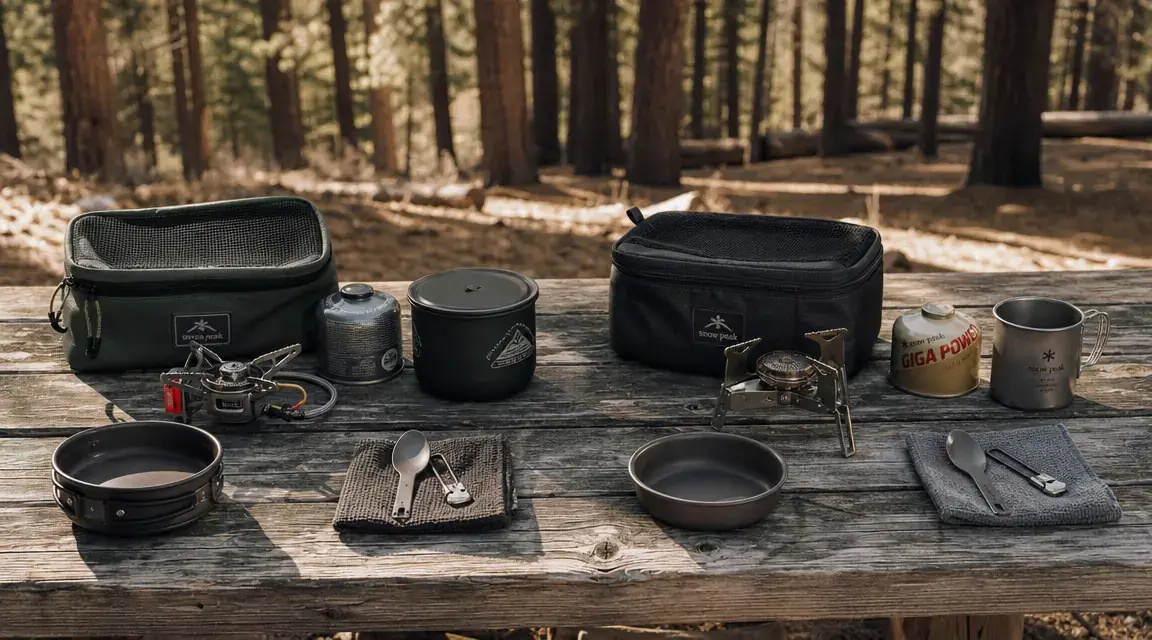
I get asked this comparison at least once a month on the trail. Someone spots my cook kit, asks what it is, and when I tell them it's the MalloMe mess kit, they say something like, 'I was looking at the MSR Trail Base. Is there really a difference?' My answer is always the same: it depends on what you're actually going to do with it. I've cooked eggs, oatmeal, ramen, and instant mashed potatoes on both. I know where each one earns its price and where it doesn't. Let me save you the guesswork.
The short version: for 90% of campers, the MalloMe wins. It's lighter per piece count, it packs down into itself, it comes with utensils and a strainer lid, and it costs about $25 at today's price on Amazon. The MSR Trail Base is a better piece of hardware at the top end, but at roughly $100 and up, it's priced for people who genuinely need titanium durability over hundreds of nights out. If that's you, great. If you're not sure, keep reading.
Ready to cook real meals at camp without spending $100 on cookware?
The MalloMe mess kit has 9,400+ verified Amazon reviews at 4.5 stars. It packs down completely, includes utensils, and costs a fraction of premium titanium sets.
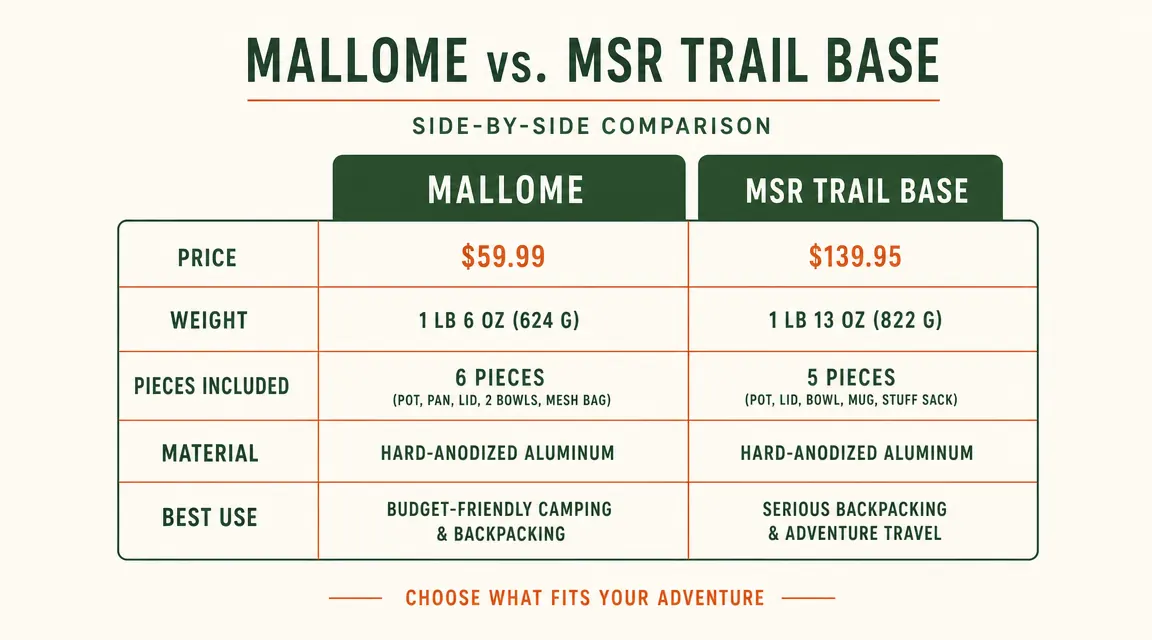
Amazon Check Today's Price on Amazon →| Spec | MalloMe Camping Mess Kit | MSR Trail Base Cookset |
|---|---|---|
| Price (approx.) | ~$25 | ~$100+ |
| Material | Hard-anodized aluminum | Hard-anodized aluminum or titanium |
| Pieces Included | 10 pieces (pot, pan/lid, 4 utensils, sponge, bag, carabiner) | 2 pots, strainer lid, pot gripper |
| Pack Size | Nests into a single compact bundle | Nests into slightly larger profile |
| Weight | ~14.8 oz full kit | ~9.9 oz (2-pot titanium version) |
| Stove Compatibility | Wide base, most canister and liquid fuel stoves | Optimized for MSR stove pairings |
| Utensils Included | Yes (forks, spoons, spatula, ladle) | No |
| Best Use | Car camping, weekend backpacking, festivals | Multi-week expeditions, ultralight thru-hikes |
Where MalloMe Wins
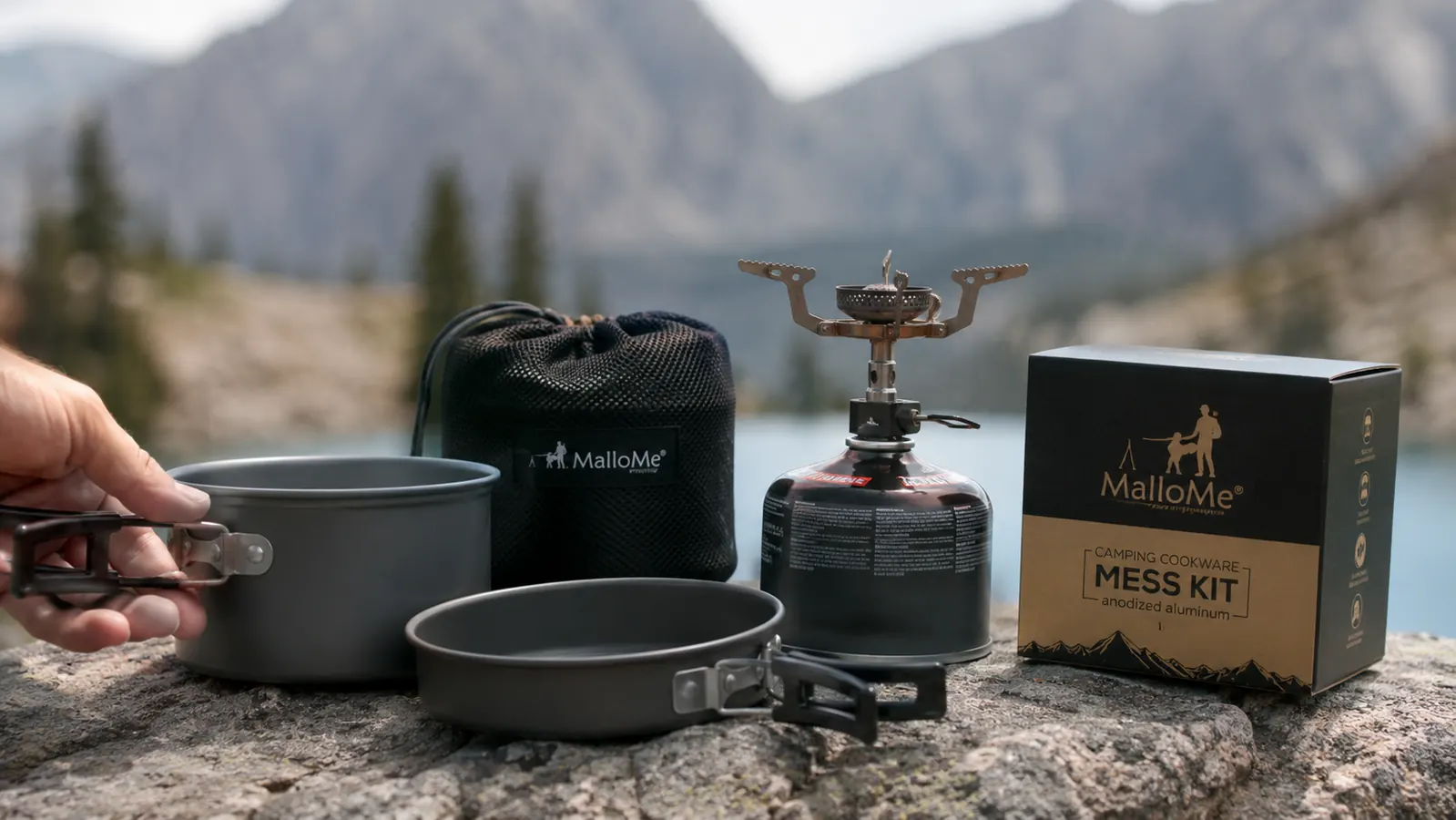
The most obvious win is value density. When I unpack the MalloMe kit, I have everything I need to cook and eat a full meal without rooting through my pack for any other item. The set includes two forks, two spoons, a spatula, a ladle, a fold-flat carabiner, a cleaning sponge, and a mesh carry bag, all nested inside the pot. The pan doubles as a lid for heat retention. That's 10 usable pieces for $25. The MSR Trail Base gives you two pots, a strainer lid, and a pot gripper. You still need to buy utensils separately, which typically adds another $10 to $20 to the MSR total cost.
Pack size matters more than people realize when you're doing a car-to-campsite trip and squeezing a week's worth of gear into a 60-liter pack. The MalloMe nests completely inside itself and takes up roughly the same volume as a wide-mouth Nalgene bottle. It rides well in the middle of a pack, doesn't clank, and pulls out as one unit. I've taken it on eight separate trips ranging from one-night family car camping to three-day backcountry loops in the Cascades. It always showed up looking basically like it did when it left the house. The hard-anodized coating held. The handles didn't rattle loose.
Stove compatibility is the third win. The MalloMe pot has a wide, flat base that sits stably on canister stoves, alcohol stoves, and wood-burning stoves with a grate. MSR designs its Trail Base set to pair best with MSR stoves specifically, and while it works with others, the base geometry is slightly narrower and can wobble on some third-party burner heads. If you already own a non-MSR stove, test fit matters.
Where MSR Trail Base Wins
Weight is the MSR's clearest advantage. The titanium Trail Base two-pot set comes in around 9.9 oz total, versus the MalloMe's 14.8 oz for the full kit. That 5-oz difference sounds modest until you're on day four of a seven-day thru-hike and every ounce you didn't pack is something you didn't carry 80 miles. Ultralight backpackers who count grams are the target buyer for the MSR, and it's a reasonable choice for them.
Material longevity is the other MSR advantage, at least on the titanium model. Titanium doesn't corrode, doesn't scratch out its coating the way aluminum can over years of abrasive cleaning, and it tends to outlast aluminum cookware significantly on the durability curve. If you're buying one cookset and expect to cook on it 100+ nights over the next five years, the MSR titanium's total cost per use starts to look more reasonable. The MalloMe is not a disposable product, but its hard-anodized aluminum coating will eventually show wear faster than titanium under identical conditions.
I cooked oatmeal on the MalloMe at a campsite in Olympic National Park at 6 a.m. in 38-degree rain. It did everything I needed. I didn't wish I'd spent four times more.
Cook Performance Side by Side
Heat distribution on both sets is similar in real-world conditions. Titanium is actually a worse heat conductor than aluminum, so the MalloMe's anodized aluminum pot heats water noticeably faster when using the same stove output. This matters for fuel efficiency on longer trips. MSR knows this, which is why some Trail Base variants include aluminum rather than titanium pots. In the field, the MalloMe boils 500ml of water in roughly 3 minutes on a 3,500 BTU canister stove. The MSR titanium model takes closer to 4 minutes for the same volume under identical conditions. Over a week of twice-daily cooking, that adds up to meaningful fuel savings.
The MalloMe pan lid is a legitimate cooking surface. I've made pancakes in it, scrambled eggs, and reheated cooked sausage. It's thin, which means it scorches on high heat if you're not paying attention, but on a stove you can modulate, it works well. The MSR Trail Base doesn't include a flat pan in its standard configuration, so for pan cooking you'd need an add-on purchase. For campers who want to cook actual food rather than just boil water for freeze-dried meals, this difference matters.
Durability Over Time
I've seen MalloMe pots come back from three-season family camping trips looking fine and I've seen them come back scratched and dented because someone packed them loose with cast iron or a fuel canister. The set rewards careful packing. Keep it in its mesh bag, nestle it between soft items, and it will last for years. The handles fold flat and lock cleanly. The rivets have not worked loose on any unit I've used or seen in the field over the past two years. The weak point, if I'm being direct about it, is the hard-anodized coating on the interior. Use non-metal utensils with it, which is easy since the included utensils are all nylon-tipped or silicone.
The MSR Trail Base is built to tighter tolerances and will outlast the MalloMe under heavy use. But 'heavy use' for the average weekend camper means 15 to 20 nights per year. At that pace, a well-cared-for MalloMe will easily last three to five years. At four times the price, the MSR would need to last 12 to 20 years at that usage rate to match MalloMe's cost-per-night value. That's a math problem most campers should think through before pulling the trigger on premium.
Who Should Buy the MalloMe
You're a weekend camper, a car camper, a festival person, or someone doing one or two backpacking trips per year. You want to cook real food and not haul a separate utensil roll. You don't want to spend $100 on a cookset when you're still figuring out whether you'll camp six times a year or twice. You want something that fits in the outside pocket of a 40-liter pack and doesn't clatter. You weigh 165 lbs and carrying an extra five ounces of cookware for the sake of titanium purity doesn't move the needle for you. You want 9,400 other Amazon buyers to have already tested this thing before you do. The MalloMe is your kit.
Who Should Buy the MSR Trail Base
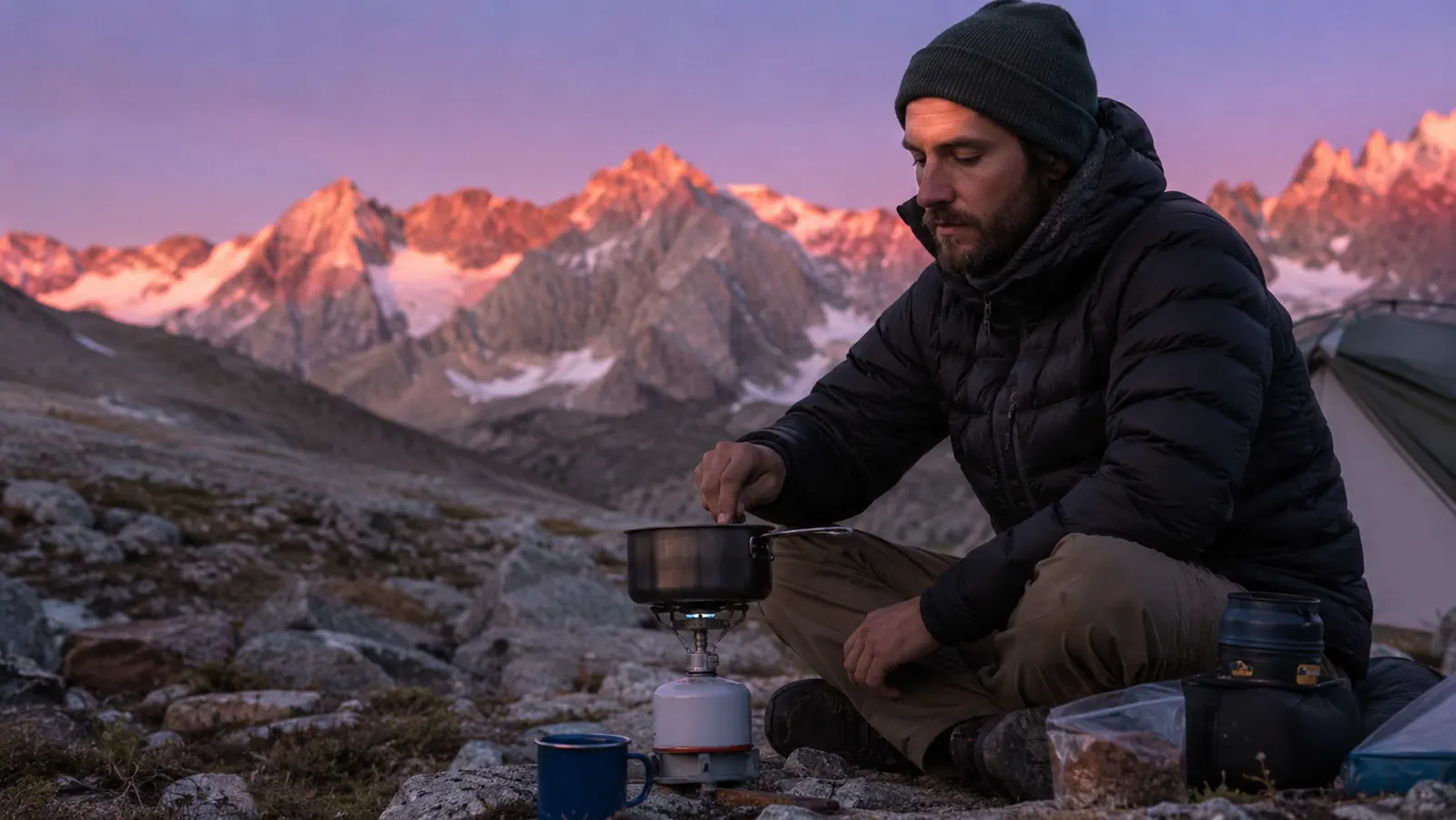
You're a thru-hiker or a serious mountaineer who counts grams and has learned from experience that shaving five ounces off your cook kit changes how you feel on day six of an eight-day ridge traverse. You already own MSR stoves and want a matched system. You cook primarily by boiling water for dehydrated meals rather than pan cooking. You're buying gear for a decade, not a season, and the cost-per-night math on a $100 titanium pot actually works out over your trip volume. You're not buying your first cookset, you're replacing a kit that finally wore out after seven years of sustained backcountry use.
The Honest Bottom Line
If you came to this page undecided and you're not a dedicated ultralight backpacker, buy the MalloMe. It has 9,420 Amazon reviews sitting at 4.5 stars. That's not a fluke. It's a genuinely capable camp cookset that includes everything you need to cook and eat a meal in the field. The MSR Trail Base is excellent hardware, but it's priced for a different kind of camper with a different set of priorities. Spend the $75 you save on a better sleeping pad, a headlamp, or a few nights of camping fees. Those investments will matter more to how much you enjoy being outside.
9,420 campers already made this call. Most of them were glad they did.
The MalloMe camping cookware mess kit packs 10 pieces into a bundle the size of a water bottle. Check today's price on Amazon before your next trip.
Amazon Check Today's Price on Amazon →