
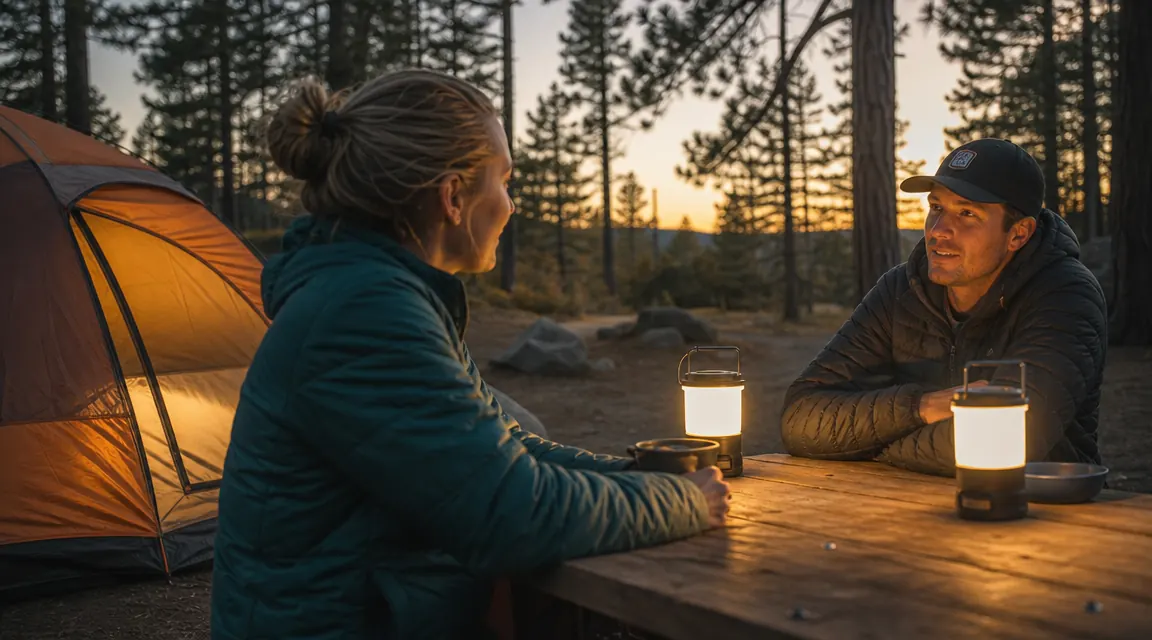
I spent eleven years as a park ranger in the Deschutes National Forest in central Oregon, and every July we would post fire restriction signs at the entrance of every campground. Within an hour of posting them, I would be fielding the same question at every site: 'So we just sit in the dark?' No. You do not sit in the dark. You just stop leaning on a campfire as your only light source, which is something most campers should do anyway.
Fire bans are not rare events anymore. In 2023, California's state parks alone issued campfire restrictions at over 200 sites from June through October. Arizona, Oregon, New Mexico, and Colorado followed similar patterns. If you camp anywhere west of the Mississippi between Memorial Day and Labor Day, there is a real chance you will show up to a site where fires are prohibited. The good news is that with the right LED gear and a simple zone-lighting plan, a fire-free campsite can be just as comfortable and far better lit than one that depends on flickering flame.
If fire bans catch you unprepared, this $14.98 lantern fixes that tonight.
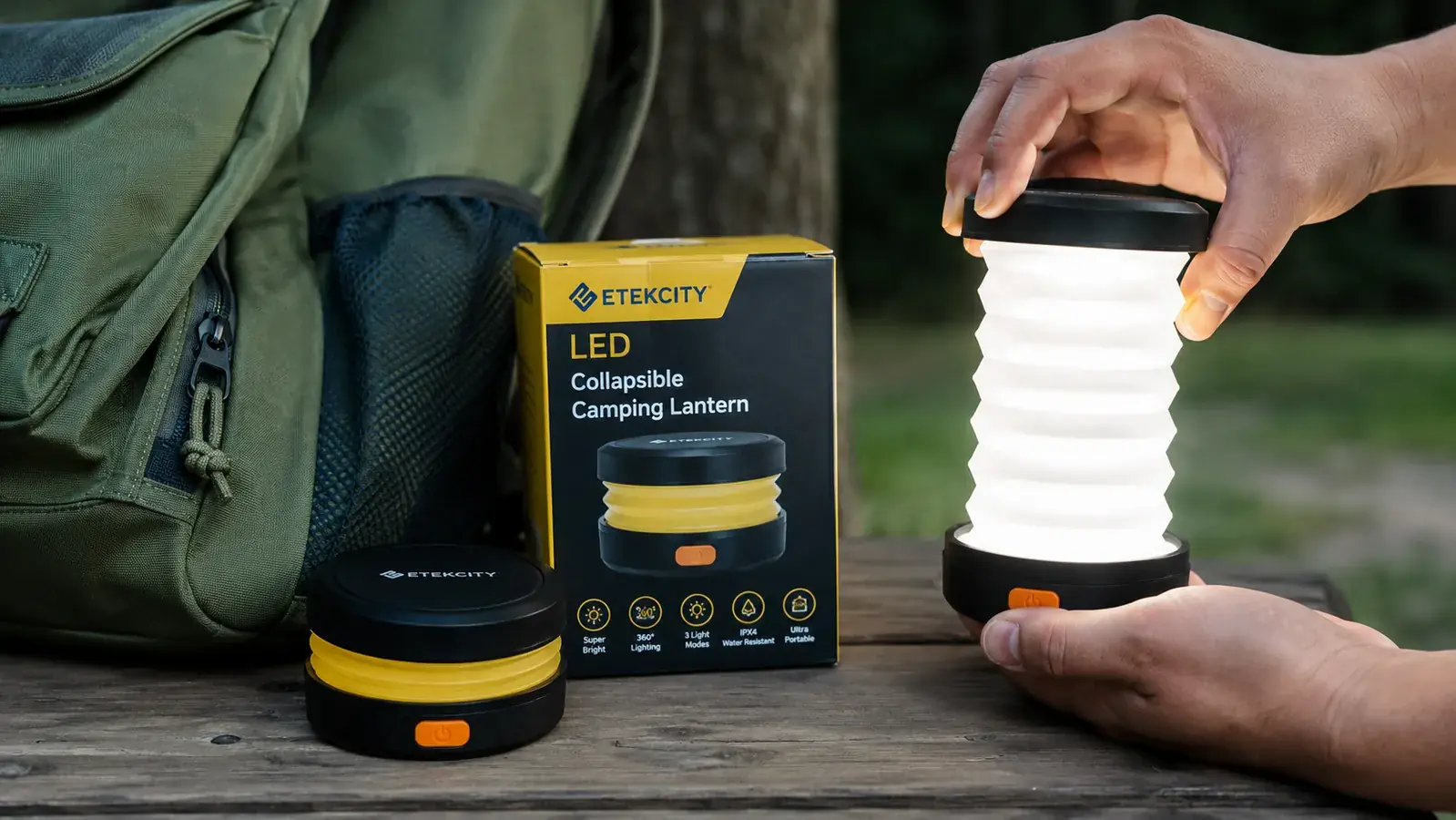
The Etekcity LED Collapsible Camping Lantern has 49,789 reviews and a 4.7-star rating. It runs on 3 AA batteries, collapses flat for packing, and throws enough light to cover a full picnic table. It is the first piece of lighting I tell new campers to own.
Amazon Check Today's Price on Amazon →Step 1: Understand the Three Lighting Zones at Any Campsite
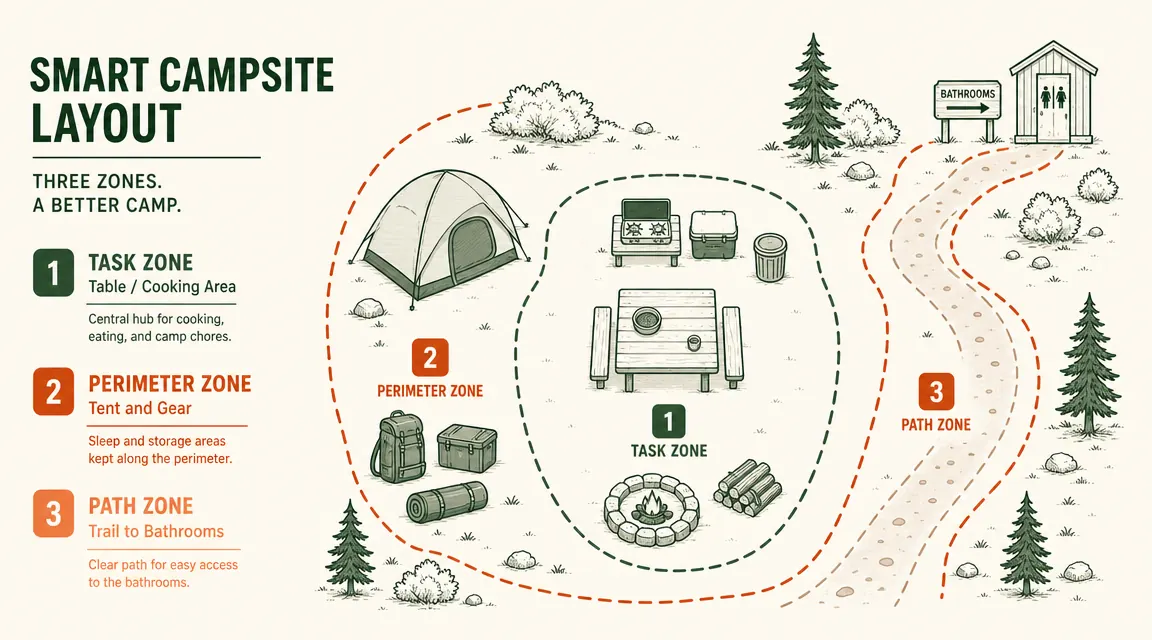
Before you unpack a single lantern, think about your campsite in three zones. The first is the task zone: your picnic table, your cook stove, any surface where you are handling food, fuel canisters, or first aid gear. This zone needs the most light, roughly 150 to 200 lumens minimum. The second is the perimeter zone: the area around your tent, your cooler, and your gear pile. This zone needs enough ambient light that you can move safely without tripping, so 50 to 100 lumens from a lower-power source works fine. The third is the path zone: the trail between your site and the bathrooms or the trailhead. This is where a headlamp comes in, not a lantern.
Most campers make the mistake of setting one lantern in the middle of the picnic table and calling it done. That single point of light leaves the tent area shadowy and the path to the bathrooms pitch black. Zone lighting fixes that. One bright lantern at the table, one dimmer or lower-powered light near the tent entrance, and a headlamp on your head. That three-piece setup handles every scenario from cooking dinner to a 2 a.m. bathroom trip.
Step 2: Choose a Central Lantern That Actually Covers the Table
The lantern you put on your picnic table is doing the heaviest lifting of any light at your campsite. It needs to be bright enough to cook by, stable enough not to tip when someone reaches across the table, and battery-powered since you will not have access to electricity at most developed sites. I have used a lot of lanterns over the years, from old Coleman propane models to modern rechargeable units, and for the price-to-performance ratio, the Etekcity LED Collapsible Camping Lantern (ASIN B00XM8HTIS) is the one I now keep in my own gear bag.
It collapses to about an inch and a half thick, which means it takes up almost no space in a day pack or a car camping tote. Pull it open and the accordion-style diffuser spreads light in a 360-degree pattern so there are no harsh shadows on one side of the table. Three AA batteries run it for somewhere between 8 and 12 hours depending on the brightness setting, which covers a full evening and then some. At $14.98, I keep three of them. One for the table, one as a backup, and one permanently clipped to my hiking kit for emergencies. Nearly 50,000 buyers have rated it 4.7 stars, and in my experience that rating holds up.
A campfire gives you warmth and ambiance. It does not give you enough light to read a first aid label or find a dropped car key in the dark. A good LED lantern does both.
Step 3: Add a Secondary Light Source Near the Tent
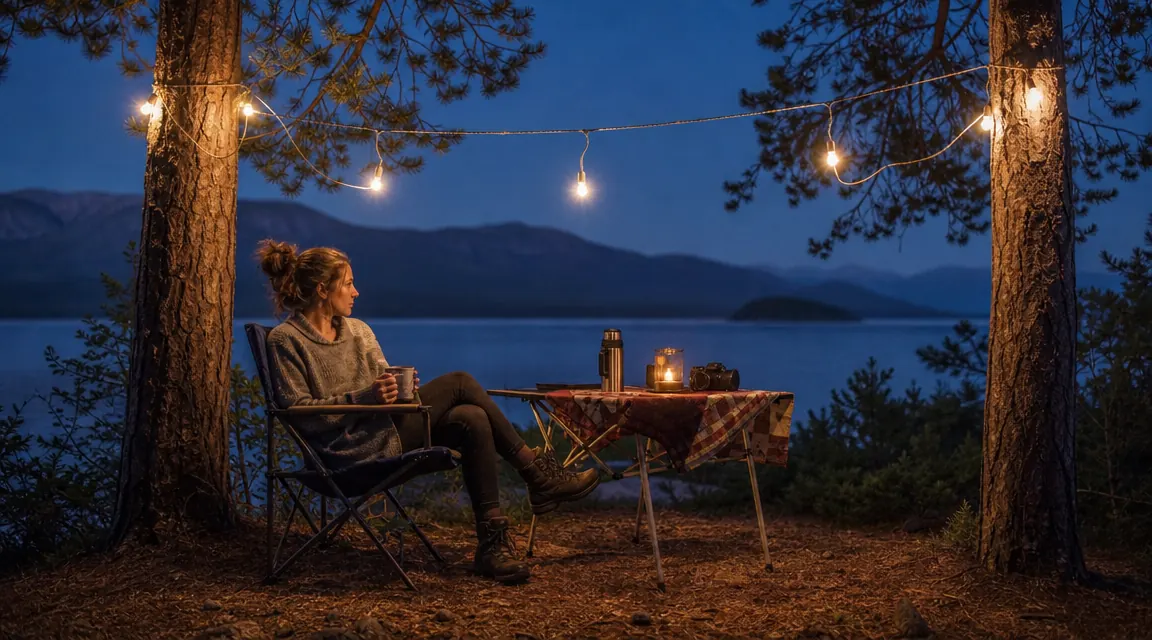
Once your table is covered, deal with the perimeter zone. The easiest solution is a second, smaller lantern or a battery-powered LED string light hung from your tent's gear loop or from a line strung between two trees. If you go with a second lantern, put it on the lower-power setting. You do not need 200 lumens near your tent. What you need is enough ambient glow to see the tent zipper, spot your shoes before you step into them, and make sure nothing has wandered into your gear pile.
Battery-powered LED string lights are underrated for this use. A 20-foot strand weighs a few ounces, runs on 3 AA batteries for 40 or 50 hours, and creates a soft overhead glow that a lantern cannot replicate. Hung low between two trees at roughly six feet off the ground, string lights turn the perimeter zone from a dark hazard into a comfortable outdoor room. They do not need to be camping-specific. Any battery-powered string lights from a home goods store will work.
Step 4: Assign Every Person a Headlamp Before Dark
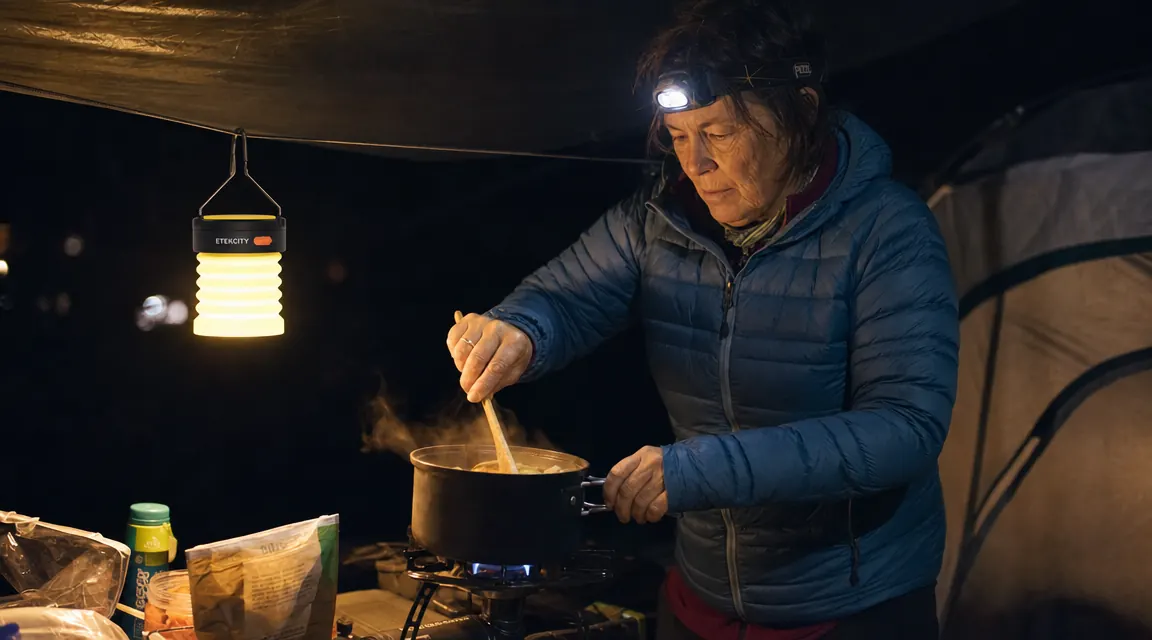
This is non-negotiable in my campsite setup. Every person who is sleeping there gets a headlamp before the sun goes down. Not a shared one. Not 'I think there is a flashlight in the car.' A headlamp on their head or within arm's reach of their sleeping bag. The reason is simple: if someone needs to get up at 2 a.m., they need hands-free light instantly, not a scramble through a dark tent looking for a flashlight.
For the path zone, a headlamp with a red-light mode is a genuine quality-of-life upgrade. Red light preserves night vision and does not blind your camping neighbors. Most budget headlamps in the $20 to $30 range include a red mode. Set it to red for camp navigation and switch to white only when you need to read something or check gear. Kids especially take to headlamps quickly. Give a child their own headlamp and they feel like they own the campsite.
Step 5: Position Lights to Avoid Ruining Your Neighbor's Night
As a ranger, the most common lighting complaint I fielded was not that someone's campsite was dark. It was that a lantern positioned at the edge of a table was shining directly into the neighboring site at eye level. LED lanterns are brighter than people expect, and a 200-lumen lantern aimed at head height across a 20-foot gap between sites is genuinely annoying.
The fix is simple: keep lanterns low and centered. A lantern sitting flat on a picnic table throws light upward and outward in a way that illuminates your site without projecting into the next one. If your lantern has a hook at the top, hang it from a low branch at about five feet off the ground, not eight. Lower light sources spread light horizontally across your site rather than casting wide beams into neighboring tents. The Etekcity lantern has a built-in hook for exactly this purpose. Hanging it from the middle of a tarp ridgeline above the table is the single best placement for a group camping situation.
What Else Helps With Fire-Free Campsite Lighting
A few additions that consistently make a difference. First, bring a small power bank if you are car camping. Even a 10,000 mAh power bank lets you recharge a USB headlamp mid-trip and keeps your phone charged for emergency calls. Second, carry more batteries than you think you need. AA batteries are cheap and available at every gas station, but it is a miserable 45-minute round trip to town in the dark because you ran out on night two of a four-night trip. I pack one extra set of AA batteries for every lantern I bring. Third, consider a lantern that doubles as a flashlight or a power bank. Several newer LED lanterns now include a USB port for charging phones. For a car camper who does not want to carry separate devices, those multipurpose units cut down the total gear count.
Finally, if you are camping with kids, teach them the difference between a fire ban and no fun. A well-lit campsite with bright lanterns, string lights, and everyone in headlamps can feel more like a fort than a sacrifice. The campfire was never the point. The campfire was just the easiest default. An intentionally designed LED setup is brighter, safer, and perfectly legal when fire restrictions are in effect.
The Etekcity lantern is the simplest fix for a fire-ban campsite.
Under $15, collapsible to almost nothing, and trusted by nearly 50,000 campers with a 4.7-star average. Stock one per person and you will never sit in the dark during a fire restriction again.
Amazon Check Today's Price on Amazon →